
Curious how a single ingredient can change the crunch and consistency of your fried menu items? As an industrial buyer, you need clear answers about sourcing, specs, and performance.
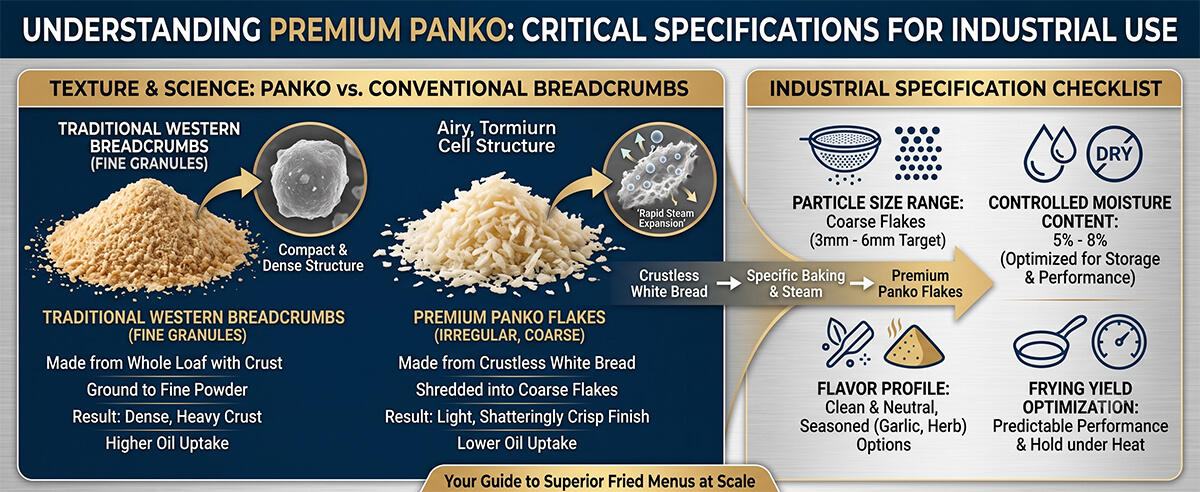
You rely on high-quality supplies to maintain consistent production. Kikkoman Panko sets an industry standard for texture, and its light, airy crumb gives pork katsu its signature crunch.
In this guide, you will learn why panko breadcrumbs differ from standard breading, how their structure affects frying yields, and what technical specs matter when you place bulk orders.
We appreciate your interest. This short primer equips you to ask the right questions and choose the best panko for your food service lines.
Knowing how this coating is made lets you evaluate suppliers with a technical eye.
Origin and name: The term panko literally translates to "bread crumbs" in Japanese. Its name reflects a long culinary history in Asia and a role as a key frying ingredient.
Traditional panko made for professional use starts from crustless white bread. Removing the crust yields a consistently pale, light product.
Pronounce it in two syllables: "pan" like pond, then "ko" like cooperate. This simple cue helps staff and vendors speak precisely.
| Feature | Traditional Panko | Western Breadcrumbs |
| Base | Crustless white bread | Whole loaf with crust |
| Structure | Irregular flakes | Fine, uniform crumbs |
| Fry result | Crisp, airy coating | Dense crust |
| Color & consistency | Uniform pale color | Varied color from crust |
When crumbs meet hot oil, a rapid physical change creates the signature crunch you expect.
The science centers on fast moisture evaporation. As the coating hits high-temperature oil, trapped water flashes into steam. That steam expands the crumb structure, causing the flakes to puff up.
Result: a light, airy crust that stays crisp longer than standard breading. Because the flakes are coarse and less dense, they absorb less oil. That lowers frying yield and keeps finished food less greasy.
| Property | Flake-style Crumbs | Fine Breadcrumbs |
| Moisture behavior | Rapid steam puffing | Slow moisture loss |
| Oil absorption | Lower uptake | Higher uptake |
| Final texture | Airy, crisp crust | Dense, compact crust |
For industrial processors, controlling crumb size and moisture before frying is critical. Test batches to match your product's desired crunch and yield.
Not all breadcrumbs behave the same when they meet hot oil. You need to manage processing and moisture to get consistent results on the line.
Processing method matters: Western breadcrumbs are typically baked dry and ground to a fine, sandy powder. In contrast, panko breadcrumbs are shredded into larger, airy pieces that hold shape during frying.
Regular bread used for standard crumbs is baked until dry, then pulverized. That yields small particles that form a dense crust.
High-quality panko starts from a fresher loaf and keeps more moisture during initial processing. This helps the flakes puff, giving a lighter finish and better hold under heat.
| Feature | Western breadcrumbs | panko breadcrumbs |
| Particle | Fine powder | Coarse flakes |
| Moisture at start | Low (dry baked) | Higher (fresher loaf) |
| Frying result | Dense crust | Light, crisp crust |
For your procurement decisions: specify granule size and target moisture. Those specs predict how the coating will perform in production.
Quality begins at the grain level: inspect flakes, not just labels, when you sample suppliers.
Start with granule size. Larger, uniform pieces deliver a better crunch for fried chicken and improve adhesion during breading.
Measure and visually check granule uniformity. Consistent flakes coat evenly and reduce patchy frying.
For production, specify the target particle range so your supplier can match your line's needs.
Blends vary from plain crumbs to seasoned mixes. Kinder’s Parmesan Herb Crispy Panko Blend shows strong garlic and umami notes.
Great Value Italian Style Panko displays a reddish powder and green herb flecks that signal added flavor. Always read ingredient lists for garlic powder, cheese, or herb additives.
Test crispness by toasting a sample in a pan with a small amount of butter.
Observe browning rate and oil uptake. That quick pan test replicates commercial frying and shows how the coating will hold up under sauce or heat.
| Criterion | Ideal Target | Why it matters |
| Granule size | Coarse, uniform flakes (3–6 mm) | Improves crunch and adhesion for chicken and fillets |
| Seasoning | Plain or labeled blend (garlic/cheese noted) | Ensures a predictable flavor when paired with sauce |
| Oil uptake | Low absorption | Reduces frying yield loss and keeps the crust crisp |
| Appearance | Uniform pale color or consistent herb flecks | Affects final product presentation and perceived quality |
Industrial kitchens use panko for more than a crunchy finish. You can create a superior coating for classic items like pork katsu and crispy fried chicken.
The crumb's structure improves texture and yield across many menu items.
"When you need consistent mouthfeel at scale, choose a crumb that holds its shape under heat and keeps moisture in the product."
Use the flakes as a binder for ground meat to make meatballs and Japanese hamburg steak that stay moist during cooking.
| Application | Benefit | Typical Dish |
| Coating | Light, shattering crust | Pork katsu, fried chicken |
| Binder | Improved moisture retention | Meatballs, hamburger steak |
| Topping | Crunchy finish | Gratins, mac & cheese |
For your operation: specify granule size and packed moisture when ordering panko breadcrumbs to match your production needs.
A few repeatable steps make it easy to add a dependable crunch to sauces, gratins, and fried items.
Start by toasting the crumbs in a pan with butter or a light splash of oil. Toasting creates a golden color and deep, nutty flavor that improves finished dishes.
Use the mixture as a crunchy topping for mac and cheese or a green tomato gratin. It contrasts well with creamy interiors and melted cheese.
When you mix crumbs into meatballs or other ground blends, they help retain moisture and keep the texture tender. For breading chicken or fillets, dry the surface well so the coating adheres and does not slide off.
If you bake instead of frying, give the crumbs a light spray of oil in the oven. That step ensures even browning and a satisfying crunch without excess frying oil.
| Technique | When to use | Benefit |
| Pan-toasting | Before adding to a dish | Golden color, deeper flavor |
| Oven spray | Baked toppings | Even browning, crisp finish |
| Mix into the ground | Meatballs, patties | Moist, tender texture |
Standardize your breading recipe so that staff can reliably reproduce results. A consistent method keeps yields steady and service predictable across your operation.
Turn simple sandwich bread into coarse, airy crumbs that mimic commercial flakes with a few easy steps. This short, reliable recipe keeps you in control of crumb size and moisture, so fried foods hold a superior crust and texture.
Ingredients: 200 grams of Japanese sandwich white bread (shokupan). Remove all crust before processing.
Pulse the bread in a food processor 10–12 times for 1–2 seconds each. Stop before the mixture turns to powder; you want coarse flakes that resemble commercial panko made for frying.
Spread the crumbs on a tray and dehydrate in the oven at 285°F (140°C) for 20–30 minutes. Check often to avoid browning.
If you prefer a manual method, freeze the loaf for 1–2 hours. Use a cheese grater to create coarse flakes that match the texture of store-bought crumbs.
Dehydrate these flakes in the oven the same way. This technique works well when you need a specific crumb size for chicken or other breaded foods.
"Making crumbs at home ensures no additives and lets you size the flakes to your recipe."
| Step | Target | Why it matters |
| Bread type | Shokupan (200 g) | Elastic crumb yields airy flakes |
| Processing | 10–12 pulses/hand grate | Prevents fine powder; keeps texture |
| Dehydrate | 285°F (140°C), 20–30 minutes | Removes moisture without burning |
Store your crumbs strategically to keep texture and safety consistent across shifts.
Fresh crumbs should be used within a few days. If you make breadcrumbs from fresh bread, rotate stock so the oldest batch is used first.
If you dehydrate crumbs in the oven, let them cool completely before packing them in an airtight container. Dehydrated crumbs can last up to one month in the refrigerator if sealed.
For store-bought panko, always check the expiration date. Once opened, move the product to a cool, dry place or refrigerate to extend shelf life and preserve crispness.
| Product | Storage | Typical Shelf Life | Risk |
| Fresh homemade breadcrumbs | Airtight, refrigerated | 2–3 days | Mold, loss of crispness |
| Dehydrated crumbs (oven-dry) | Airtight, refrigerated | Up to 1 month | Stale if exposed to humidity |
| Commercial panko (opened) | Cool, dry place or fridge | Check expiration date | Flavor loss, moisture pickup |
Rice-based crumbs deliver the airy, shattering crust many chefs expect from traditional coatings.
4C Gluten Free Plain Panko is a rice-based alternative that mimics the light texture of wheat-based coatings. You get a similar lift and crunch while avoiding gluten.
When sourcing gluten-free panko breadcrumbs, look for rice-derived formulas that replicate the coarse-flake texture. These options often bring subtle toasty notes that improve flavor compared with plain bread crumbs.
Check processing controls: ensure the supplier uses a dedicated gluten-free line or certified facility. This prevents cross-contact and protects customers with celiac disease or allergies.
"Offer inclusive menu items without sacrificing texture — rice-based crumbs let you do both."
| Option | Base Ingredient | Key Benefit |
| 4C Gluten Free Plain Panko | Rice | Light, airy texture; gluten-free certified |
| Seasoned gluten-free blend | Rice + herbs | Added flavor; reduces prep time |
| Custom industrial blend | Rice or alternative grains | Formulated to match specific fry yields |
Use these final tips to turn a simple coating into a repeatable, signature finish across your menu.
You now have the basics for choosing breadcrumbs that deliver a consistent crunch for pork katsu, crispy chicken, and other fried foods. Apply specs, test on the line, and standardize your breading way to control yield and flavor.
Whether you bake a topping in the oven or fry a main dish, the right bread crumbs lift the texture in gratins, meatballs, and plated dishes.
Thanks for reading this guide. Thanks for committing to quality — use panko to make each dish a repeat customer favorite.


Hello, I am the online customer service


