
Could a simple coating make fried food lighter, crispier, and less greasy? The answer starts with large flakes and controlled moisture. This guide shows you how to prepare a practical, homemade version for American kitchens.
The term panko means “bread crumbs” in Japanese and is written パン粉. Using two slices of sandwich bread, each about 3 centimeters thick, you can make nearly 200 grams of coarse flakes. Food.com’s basic recipe requires about 5 mins of prep before drying, and fresh white bread is the main ingredient.
You will learn which tools to use, how to build an even coating, and where to source dependable products. The method also explains why texture matters for tonkatsu, chicken katsu, and shrimp. Finally, you will learn when to use fresh crumbs and when to refrigerate dehydrated ones for longer storage.
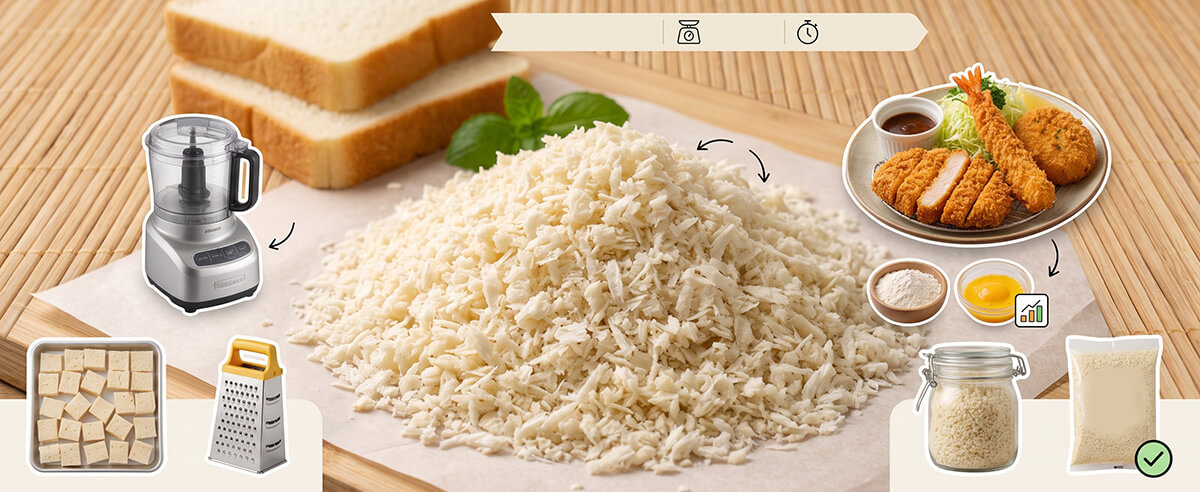
Panko, written パン粉, literally means “bread crumbs” in Japanese. In American kitchens, it describes large flakes made from soft, crustless sandwich loaves. This structure gives fried food a lighter bite and a more open surface.
Western regular bread crumbs often start with a loaf baked until nearly dry. A grinder then turns it into fine particles that resemble coarse sand. The result creates a firm, thin coating that works well for meatballs, baked dishes, and simple frying.
By contrast, panko breadcrumbs come from shredded fresh bread. The flakes stay larger and retain small air pockets. That difference gives this Japanese coating a more delicate texture than regular crumbs.
During frying, moisture escapes from fresh flakes, briefly puffing them. The outside then crisps while the center stays airy. Removing the crust helps, too, because it's denser than the soft center.
Choose the larger pieces for a crunchy finish. Their uneven surface catches heat well and adds texture without making the food feel heavy.
Start with a soft loaf and a few simple tools. The right ingredients help you create large flakes with a light, airy texture at home.
Shokupan, also called Japanese milk bread, has a plush, elastic crumb. It shreds into uneven flakes instead of turning into powder. If you cannot find it, choose soft white bread with a flexible crumb. Avoid dense loaves that crumble too finely.
A bread food processor gives you strong control over flake size. Use short pulses, then check the texture after each one. A large-hole cheese grater also works well, especially with thick slices.
For the best result, freeze the loaf before grating. Cold pieces stay firm and create fluffy pieces. The grater hole size controls the final texture.
Use fresh flakes for a quick recipe, or dry them for longer storage. Store-bought breadcrumbs are not usually gluten-free. To make panko for special diets, select wheat-free sandwich bread or plant-based ingredients for a vegan option.
You can make a light, crisp coating with two thick slices and a few careful steps. Use about 200 grams of soft sandwich loaf, with each slice measuring 3 centimeters thick. This simple method gives you control over flake size and moisture.
First, remove the brown crust from both slices. Cut the soft center into 1-inch (2.5-centimeter) cubes. Handle each piece gently to keep its airy texture intact.
Place the cubes in a food processor. Pulse for 1–2 seconds at a time rather than running the machine continuously. About 10-12 pulses usually create large, uneven flakes. Stop when the pieces look coarse, not powdered.
| Step | Amount or Time | Result |
| Prepare loaf | 200 grams; two thick slices | Soft center without crust |
| Cut pieces | 1 inch or 2.5 centimeters | Even cubes |
| Process | 10–12 short pulses | Coarse homemade panko flakes |
Your storage plan decides whether you should use the fresh or dried method. Moisture affects texture, shelf life, and frying results.
Fresh panko works well for fried food. Moisture escapes in hot oil, so the flakes puff before they turn crisp. This creates a light coating with a delicate bite.
Use it within a few days. Undried bread holds moisture, which may lead to mold during longer storage. Keep the container chilled and dry before use.
Leave fresh bread out for 1–2 hours.
Food.com notes that dense loaves may need up to 12 hours. For longer keeping, spread the crumbs on parchment. Dry them at 285°F (140°C) for 20–30 minutes, then cool them fully.
| Option | Best Use | Storage Guidance |
| Fresh panko | Frying | Use within a few days |
| Dried panko | Future recipes | Cool fully before sealing |
| Air-dried slices | Quick preparation | Dry 1–12 hours |
A crisp coating begins with a dry surface and a steady hand. This simple method works for seafood, poultry, meat, vegetables, fruit, and baked casserole dishes.
Pat each piece dry with a paper towel. Moisture can prevent the flour and egg from sticking. For ground meat dishes, mix coarse flakes into meatloaf, meatballs, or Japanese hamburger steak. They help hold moisture and create a tender texture.
For casseroles, sprinkle the coating over the top just before baking. Use enough to cover the surface without creating a heavy layer. Coarse pieces add more crunch than fine regular bread crumbs.
Set up three shallow bowls. Add seasoned flour to the first, beaten egg to the second, and panko to the third. Dip the food into flour, then egg, and finally the flakes. Press gently so the coating covers every exposed area.
“Kikkoman lists 0 grams of total fat and 35 milligrams of sodium per one-half-cup serving.”
Cooking fat still affects the finished food, so measure oil carefully.
Choose the right dish to make the most of a crisp, airy coating. Tonkatsu and chicken katsu benefit from large flakes that brown well without feeling heavy. Fried shrimp and korokke also gain a crunchy finish and a light texture.
For an easy oven recipe, use this topping on chicken Parmesan. It delivers a golden crust without deep-frying. You can also sprinkle it over baked fish, roasted vegetables, green tomato gratin, or stovetop macaroni and cheese.
“A crisp topping can turn a simple meal into a more satisfying dish.”
These flakes work inside food, too. Stir them into meatloaf, meatballs, or Japanese hamburger steak. They help hold moisture and create a tender texture. The result is filling food with less added fat than many fried options.
Smart shopping starts with the label, not the package design. Compare ingredients, sodium, package size, and dietary claims before you buy panko breadcrumbs for home cooking.
Healthy Heart Market lists Kikkoman Panko Bread Crumbs at $4.29 for an 8-ounce resealable bag. The listing showed six units available at the time of publication. Ingredients include wheat flour, cane sugar, yeast, and salt.
A one-half-cup serving has 110 calories, 24 grams of carbohydrates, 4 grams of protein, and 35 milligrams of sodium. It lists 0 grams of total fat, saturated fat, and trans fat. Check carefully for a gluten-free claim, since standard products usually contain wheat. Some fresh panko may also contain milk.
Refrigerate opened packages and use them by the expiration date. Keep homemade dried panko in an airtight container in the refrigerator for up to one month. Fresh panko works best soon after preparation, while a food processor can prepare a new batch in minutes (mins).
| Option | Key Detail | Storage | Best Check |
| Kikkoman | $4.29 per 8 ounces | Refrigerate after opening | Wheat and sodium |
| Fresh panko | Soft, moist texture | Use promptly | Milk ingredients |
| Dried panko | Longer keeping quality | Airtight for one month | Cool before sealing |
With a few simple tools, you can prepare panko breadcrumbs at home and control their size, moisture, and texture. Soft white bread or a suitable gluten-free loaf works well. A food processor needs only 10–12 short pulses to create coarse flakes, while a second processor option is unnecessary for small batches.
Use homemade panko fresh when you want a light coating, or dry it for easier storage. This method helps reduce excess fat without losing crunch. Keep the finished bread crumbs cold and sealed, then use them within the recommended time.
Try the coating in one recipe first, then explore other recipes. It works well with chicken, shrimp, casseroles, roasted vegetables, and meat dishes. When shopping, review sodium, gluten, and allergen content, package size, and expiration dates. These checks help you choose dependable food products for everyday dishes.


Hello, I am the online customer service


