
Could an unplanned crumb change disrupt your menu or delay a repeat order? Overseas distributors and importers evaluating panko breadcrumbs buy options need a stable global supply chain, not an individual retail purchase.
We focus on bulk purchases through direct factory inquiries or a suitable distribution channel. Buyers need repeatable specifications and dependable supply to plan production, stock, and customer orders. OEM means private-label manufacturing, while ODM means product development and customization; both may shape a sourcing discussion. A purchase-ready specification is the first step toward assessing supply options.
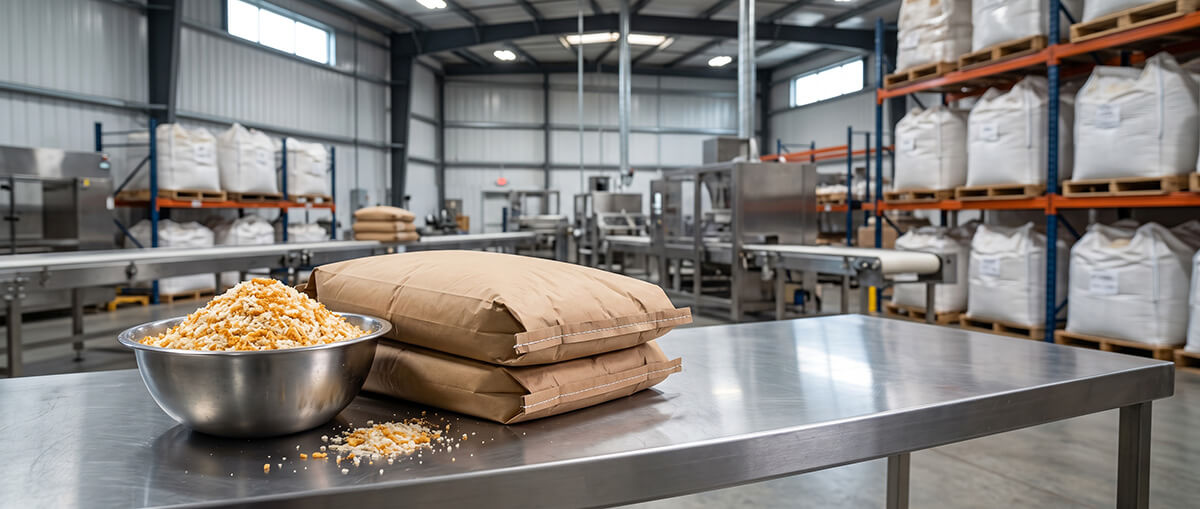
A chicken coating line and a pasta topping station may need different crumbs, even when both buy panko. Define the food use, flavor, crumb size, coating needs, ingredients, allergens, and pack format before requesting a quote.
MOQ means minimum order quantity, the smallest order a supplier will accept for a specified product or configuration. The intended menu helps set the product details. A coarse, open crumb may suit a visible outer layer, while a finer profile may fit a different coverage target.
Define the food use, flavor, crumb size, coating needs, ingredients, allergens, and pack format before requesting a quote.
Plain panko gives kitchens more control over seasoning. Seasoned bread crumbs include added flavor components, so buyers should check the seasoning and recipe consistency across repeat orders. Recipe changes can affect both taste and customer expectations.
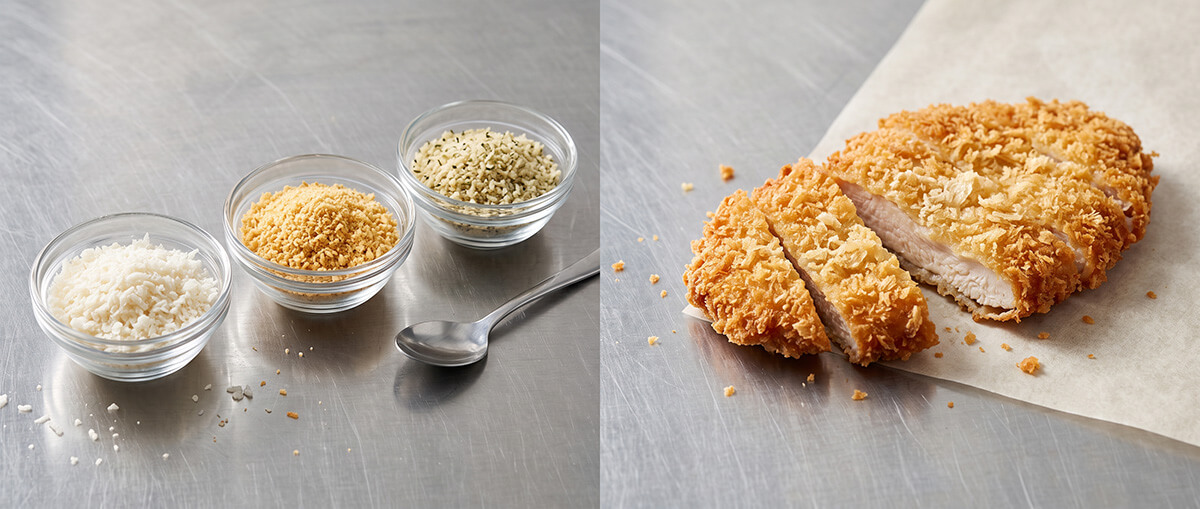
Crumb size describes the particle dimensions. Ask for the target crumb size and how you'll assess it during the coating process. Also discuss how crumbs adhere, spread, and cover the food after the kitchen’s usual preparation.
Rice-based gluten-free panko is available. Buyers should confirm its suitability against their market's labeling rules and their customers’ needs. A gluten-free style description alone does not replace a review of the full ingredient and allergen statement.
Pack format also affects how the item moves through storage and kitchen use. State whether the order needs retail packs, food-service bags, or another configuration, then confirm case details. Clear requirements make it easier to assess the right supply route.
Direct factory supply suits repeat, high-volume orders, while distributors may suit smaller, more frequent replenishment. The right route depends on order scale and how quickly buyers need local stock. For U.S.-market buyers looking to buy panko breadcrumbs in the USA, include destination and labeling needs in the initial discussion.
Our panko products page lets B2B buyers review product information and start an inquiry. The route should match the order, not just the product name.

A direct factory discussion can cover OEM scope, ODM needs, packaging configuration, MOQ, and production scheduling. Each point depends on the requested product and order details. Buyers should ask how a proposed arrangement supports their forecast and repeat orders.
To make the first factory inquiry useful, prepare these details:
This information helps frame a discussion about panko bread and related products. It also makes it easier to identify which questions need a firm answer before a purchase order.
A distributor can fit buyers who value local inventory access, smaller replenishment quantities, or established regional delivery. That route may help when a buyer needs stock without planning a larger direct order. Buyers should still compare the product specification and pack details with the kitchen’s needs.
Ask whether the distributor can supply the same panko specification across repeat orders. A local stock item may differ from the trial product in crumb size, recipe, or label. Confirm the exact item before adopting it as a regular source.
Buyers sourcing panko bread for different accounts may use multiple routes. The key is to document the approved product and match each order to its source. Once the route fits, the next decision is how the crumb performs in the coating.
Panko is generally coarser, lighter, and flakier than standard bread crumbs. Its open flakes create a different surface than the finer, denser particles in many standard breadcrumbs. Crumb structure affects coverage and the texture of the finished coating.
Larger, irregular flakes leave more visible texture on a coated food. Finer crumbs can form a tighter, more even layer. The best fit depends on the look and feel a buyer wants from the menu item.
Kikkoman Panko is made from specially baked, crustless bread. That detail describes this named product, not every panko product. When comparing samples, buyers should consider the crumb profile and how it spreads over the food.
An open crumb structure can retain less oil than finer standard bread crumbs and can produce a crisp coating. That result is not guaranteed in every kitchen. The food, coating method, and cooking process all affect the outcome.
During frying, a panko coating may create a crisp exterior with larger, open flakes. A fine, dense coating can feel more compact. Oil temperature, coating thickness, and food moisture also shape the result.
Baking can bring out a textured surface, though the final finish depends on the recipe and oven process. The same crumb may look different on a small piece of fish than on a larger cut of pork. Test it on the menu item and equipment used in service.
Reheating can soften a coating, especially when steam builds around the food. A crisp first cook doesn't guarantee the same texture after holding or reheating. Buyers should assess both fresh and served results when those steps matter.
Choose panko when its flake profile fits the intended coating, not simply because it carries a familiar name. Match the desired result to the menu applications the kitchen actually serves.
A commercial kitchen might use panko to coat chicken at one station and top roasted vegetables at another. Match each use to the role the crumbs play in the recipe. The product can serve as a coating, topping, binder, or garnish.
The table links common menu uses with preparation and the crumb’s function. A test batch can show whether coverage, texture, and portioning suit the kitchen’s routine.
For fried or air-fried chicken and fish, the crumbs form an outer coating. Pork and tofu can use panko in an oven-baked layer. In each case, preparation and recipe choices affect the finished texture.
Sprinkle panko on casseroles and roasted vegetables before baking. The crumbs create a distinct top layer. Kitchens can also use panko as a garnish on vegetables, pasta, and salads.
For meatballs and veggie burgers, panko acts as a binder. Its lighter crumb suits recipes that call for bread crumbs without a dense feel. The amount and other recipe ingredients still affect the final result.
Plain panko lets the kitchen control seasoning for different dishes. A seasoned product may suit a fixed recipe, but buyers need to account for its flavor in the finished dish. The selected use should guide the pack and label details needed for consistent purchasing.
An 8-ounce retail can and a multi-pound food-service bag serve different buying patterns. Pack choice affects storage, handling, and order planning. Compare the actual pack and case configuration with the account’s usage.
Retail-size cans may suit product evaluation or small-volume use. Food-service bags and case quantities may fit larger kitchen needs, but no format suits every account. Confirm pack size, units per case, and how the stock will move through the operation.
Great Value Plain Panko Bread Crumbs are sold in an 8-ounce cardboard can. That named product is labeled low sodium, cholesterol-free, and shellfish-free. Those claims apply to that product’s label, not to panko as a category.
Kikkoman Panko is available in 8-ounce and 1-pound packages. Gordon Choice coarse panko is packed in 3-pound bags, with six bags per case. Wholesale listings also include 25-pound bags of ground and coarse panko.
These examples show a range of available pack types, not a recommendation for every buyer. A smaller pack may support an evaluation, while case quantities may suit planned service volume. Check dimensions and case configuration for storage and receiving needs.
Kikkoman Panko lists wheat flour, cane sugar, yeast, and salt. Buyers should compare the full declaration with their recipe, customer needs, and market rules. One product label does not describe every panko recipe.
Kikkoman Panko lists 110 calories and 35 mg sodium per 1/2-cup (30 g) serving. It also carries Orthodox Union Kosher certification and claims to have no added preservatives. These are product-specific details that buyers should match to the current item label.
Gordon Choice lists 110 calories and 45 mg sodium per 0.67-cup (30 g) serving. Both examples use a 30 g serving weight, yet the serving volume differs. Buyers should compare serving size and nutrition values together.
Review the nutrition panel, ingredients, allergens, and label language for the item and destination market. Confirm that any claim matches the product being ordered. Buyers should validate certifications and quality documentation before approving a supplier.
Certification names alone are not enough to approve a product. Scope matters: the document must cover the product and facility under review. Check the evidence tied to the specific SKU and order.
A structured review helps procurement teams check whether records match the proposed item. The table sets out core areas to discuss before approval.
Ask whether each document applies to the item being quoted. A company-wide document may not establish coverage for every product or site. Keep the product name and facility details with the review record.
Allergen management includes the declared allergens and controls for possible cross-contact. Compare those details with the buyer’s market and customer requirements. A label statement should agree with the product information supplied for the order.
Lot traceability links a finished product to its production records. Buyers can ask how the lot code appears on cases and what records support a trace. These details help teams respond to product questions or recall needs.
Confirm Halal and Kosher requirements for the specific product, facility, and intended market. Do not assume that a supplier’s general status covers every SKU. Once checks are complete, procurement can compare the commercial terms that shape an order.
MOQ, price, and timing depend on the chosen crumb specification, order volume, packaging, customization, destination, and shipping terms. Request current terms for the exact configuration under review. One quote may not apply to a different pack or destination.
The product recipe and pack format can change the order value. Custom work may add planning steps, while destination and shipping terms affect the order timeline. Buyers should compare quotes only when the requested details match.
Prepare these details before asking for current terms:
The list gives a supplier a clear basis for a quote. Add any product information that affects the requested configuration, such as a plain or seasoned recipe. Keep each quote tied to its stated details.
Ask directly for the current MOQ and lead-time terms for the requested configuration. Do not assume that terms for one product, pack, or destination will carry over to another. A written quote should identify the item and order conditions.
Price comparisons should account for the same pack basis and delivery terms. A low unit figure may not reflect case quantity or shipping. Check the full offer against the forecast and planned use.
Timing matters when an order must arrive before stock runs low. Align the supplier’s stated schedule with internal approval, transit planning, and receiving needs. A procurement plan should leave time to resolve questions before production or shipment.
Once the quote matches the order, buyers can plan how to keep repeat supply steady. Continuity depends on managing the approved specification and the order cycle.
An unapproved label change can delay a repeat panko order at customs or during customer review. Early checks help prevent avoidable disruption. Keep the approved product specification and label details aligned with each order.
Before shipment, confirm required documents, ingredient and allergen labeling, and applicable import rules for the destination. Requirements can differ by market and product. Buyers should validate them with relevant authorities or qualified import partners.
Do not rely on a label used for another destination without checking that it fits. Review the product name, ingredients, allergens, and any required documents against the receiving market. A mismatch can delay review or prevent a planned sale.
Retain an approved written specification and compare it with each order confirmation. Confirm any proposed change before production starts. Review lot documents at receipt so teams can link the delivered goods to the order.
Repeat orders also need a replenishment plan. Buyers can compare expected use with stock on hand and the supplier’s stated schedule. This gives the team time to address changes before the next order becomes urgent.
Use these controls to manage routine risks:
Keep the approved version easy for procurement, quality, and receiving teams to find. Record who approves a change and when it takes effect. That practice helps prevent one team from ordering an older product while another expects a revised version.
A steady supply plan depends on accurate records and clear change control. Retail channels play a limited role for commercial buyers, though local stock can help with product evaluation.
Keep the approved product specification and label details aligned with each order.
Finding one retail pack is different from securing a repeatable wholesale source. Grocery stores commonly place panko with bread crumbs in the baking or pantry aisle, though store layouts vary. Retail availability does not confirm a steady commercial supply.
A store app or an employee can help you find it. The aisle may also hold standard breadcrumbs and other breading products. Check the package for the product name and format before choosing it.
Dollar Tree and Lidl assortments and local availability can vary. Buyers asking whether either retailer sells panko breadcrumbs should check directly with the local store or its app. Neither retailer should be treated as a confirmed bulk source.
Retail packs can help a kitchen examine a product or support small-volume use. Regular commercial replenishment needs a planned source with order terms that fit the operation. A shelf item may not remain available in the same pack or product format.
Ground panko is a distinct format buyers may encounter. Its particle profile differs from a coarse format, so the name alone doesn't indicate how it will perform in a recipe. Confirm the product details before comparing it with another crumb.
Some buyers look for panko bread near standard breadcrumbs because the products share an aisle. Store layouts, stock, and product labels vary. A quick local check can help with a sample, but it does not replace a commercial plan.
Retail shopping can help you evaluate a small pack or confirm a label detail. It does not confirm a supplier’s ability to meet regular order needs. Commercial buyers should confirm the product, order terms, and destination requirements before placing an order.
Reliable panko sourcing starts with a defined product specification. A written specification supports consistent purchasing, while order terms and documents must fit the destination market.
Prepare the product specification, target volume, pack configuration, and destination before requesting a factory quotation. Include OEM or ODM needs if private-label manufacturing or product development is part of the inquiry.
Start a B2B inquiry at https://www.jiudufood.com/product.


Hello, I am the online customer service


