
Japanese panko breadcrumbs are light, airy crumbs made from crustless white bread and shaped into crisp flakes. Regular breadcrumbs usually come from whole baked bread, including the crust, so they create a finer, denser coating. Japanese panko breadcrumbs often absorb less oil, but the result depends on particle size, cooking temperature, coating method, and time. For most foods, Japanese panko breadcrumbs deliver a lighter crunch, while regular breadcrumbs work better when a recipe needs a compact coating, binder, or smoother texture. The better choice depends on the dishes you are preparing.
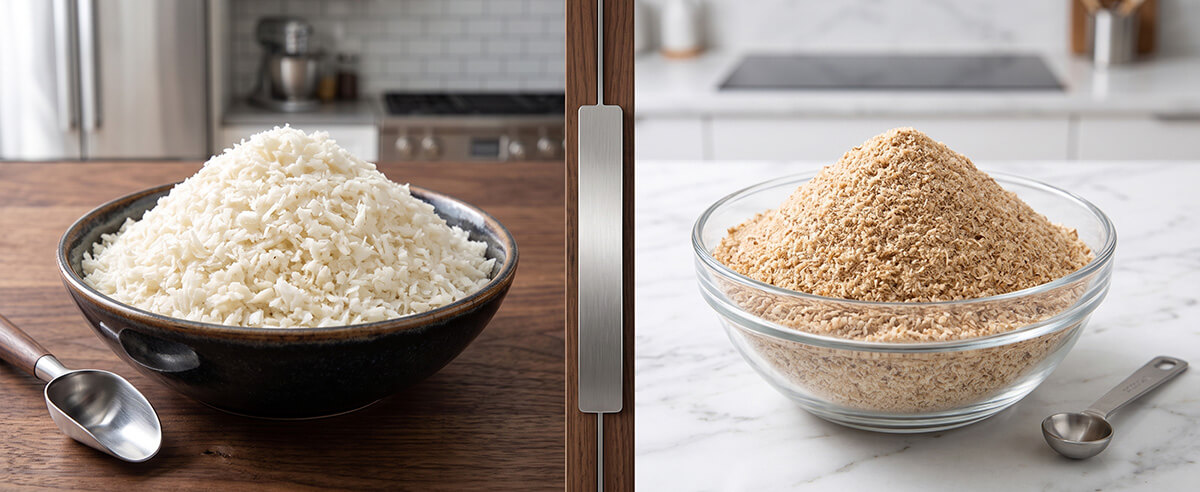
Japanese panko breadcrumbs, written パン粉 in Japanese, are traditionally associated with Japanese cuisine and are widely used as a light coating ingredient. Unlike ordinary breadcrumbs, panko is made from a soft white bread that produces larger, more open flakes. Commercial products vary in size and shape, so “authentic” describes the style and production characteristics rather than a legally protected category. Japanese panko breadcrumbs are especially popular for tonkatsu, shrimp, chicken cutlets, and croquettes.
Regular breadcrumbs are a common coating and binding ingredient used in Western cooking. They can come from regular bread that is baked, dried, and ground, although products vary: some are fine, coarse, seasoned, fresh, or dried. Unlike panko breadcrumbs, regular breadcrumbs usually have a compact texture that works well in meatballs, meatloaf, stuffing, and other recipes that need binding.
The difference between panko and regular breadcrumbs often begins with how the source bread is baked, dried, and broken into particles. Panko comparisons are not absolute because products differ in moisture, size, seasoning, and processing.
Some traditional or industrial panko products use electrical-resistance heating, in which an electric current cooks the dough internally. This method can limit browning and produce a soft, pale loaf with little or no hardened crust. The bread is then shredded into airy flakes. Panko can also be made from ordinary bread at home: pulse it in a bread food processor, spread the crumbs on a baking sheet, and dry them for several minutes (mins). A bread food processor method will not always match commercial panko, but it provides a practical homemade option.
Many regular breadcrumbs come from bread baked in a conventional oven, where heat moves from the outside inward and can form a crust. When the loaf is dried and ground, the crumb and, sometimes, the crust create a denser, mixed-size particle. This contrast explains why panko often gives fried foods a lighter crunch, while regular breadcrumbs provide a compact coating or binder. The panko choice should depend on the desired result.
| Feature | Authentic Japanese Panko | Regular Breadcrumbs |
| Raw Material | Usually crustless white bread, although panko products can vary | Baked bread; some varieties include the crust, while others do not |
| Texture & Shape | Large, irregular, airy flakes that create a light texture | Usually fine, compact, and granular; size varies by product |
| Oil Absorption | Typically lower oil absorption, which can support a lighter crunch | Typically higher oil absorption, but the result depends on particle size and cooking |
| Best Used For | Coating fried foods, tonkatsu, seafood, chicken, and baked dishes | Ground meat mixtures, meatballs, meatloaf, stuffing, and binding |
| Crunch Retention | Often stays crisp longer after frying, especially when cooked and held correctly | Can soften sooner as it absorbs moisture from the food |
These differences between panko and regular breadcrumbs make panko a useful choice when a recipe needs visible crunch, while regular breadcrumbs suit compact coatings and binding. Plain panko breadcrumbs usually have a mild flavor, but seasoned regular breadcrumbs may contain salt, herbs, cheese, or other ingredients. Always check the label before adding more seasoning. Panko is not automatically healthier or lower in calories; its main advantage is its shape and cooking performance. Use panko for dishes like crispy fish, chicken cutlets, or macaroni cheese, and choose regular breadcrumbs for foods like meatballs and stuffed vegetables. This panko vs. regular comparison also applies to homemade products, so panko home recipes may produce different results from commercial crumbs.
Selecting between panko breadcrumbs and regular breadcrumbs affects coating adhesion, moisture management, product yield, holding time, and final presentation. In commercial food processing, the best choice depends on the food, cooking method, packaging, freezing, and reheating conditions.
Yes. Start with an equal volume of regular breadcrumbs or Japanese panko breadcrumbs, then adjust the coating as needed. Regular breadcrumbs usually create a denser result, while panko breadcrumbs provide larger flakes and a lighter crunch for coating fried foods. If a recipe calls for panko but you only have regular bread, use homemade panko: tear fresh panko or bread into pieces and pulse them briefly in a food processor. To make panko closer to regular crumbs, run the processor a little longer. You can also make panko from crustless bread, spread the crumbs on a tray, and dry them for several minutes (mins). A bread food processor helps make panko quickly, but the final texture will vary by bread type. Homemade panko works well in simple recipes, although commercial panko may have more consistent flakes. When adapting recipes, remember that bread, sugar, flour, and other ingredient choices affect moisture and browning; sugar can make bread crumbs brown faster.
Traditional panko is made from wheat bread and is not gluten-free. A gluten-free panko product may use rice flour or another gluten-free grain, but check the package for certified gluten-free labeling and allergen information. People with celiac disease should also consider cross-contact during production. Do not assume that homemade panko is gluten-free unless every bread and ingredient used is certified safe. Check whether the product contains added sugar, seasonings, or other flour before using it in food or dishes.
Commercial buyers should compare suppliers rather than assume every manufacturer offers the same service. Request specifications for flake size, moisture, ingredients, allergens, packaging, minimum order quantity, certifications, shelf life, shipping, and pricing. A B2B supplier may provide samples or OEM customization, but availability varies. Before you make panko a regular purchasing choice, test the product in your recipes, including coating fried foods and baked dishes. Comparing samples of breadcrumbs made from fresh bread, regular bread, or crustless bread can help a food-processing facility choose the right product. Buyers can contact qualified suppliers to compare product specifications or request a sample without committing to a large order.
Choose panko breadcrumbs for a light, flaky texture, especially when coating fried foods or topping baked dishes. Choose regular breadcrumbs when bread needs a fine binder or thickener. Panko and breadcrumbs can replace each other in some recipes, but panko produces a different crunch. For home cooks and commercial kitchens, choose panko for crispness and breadcrumbs for cohesion.


Hello, I am the online customer service


